In the pantheon of classic European cuisine, few dishes command as much respect and admiration as the Beef Wellington. It is often regarded as the “Mount Everest” for home cooks—a grand, complex masterpiece that combines a perfectly seared tenderloin, earthy mushroom pâté, savory ham, and a golden, flaky pastry crust. When executed correctly, it is a symphony of textures and flavors that serves as the ultimate centerpiece for any celebratory dinner.
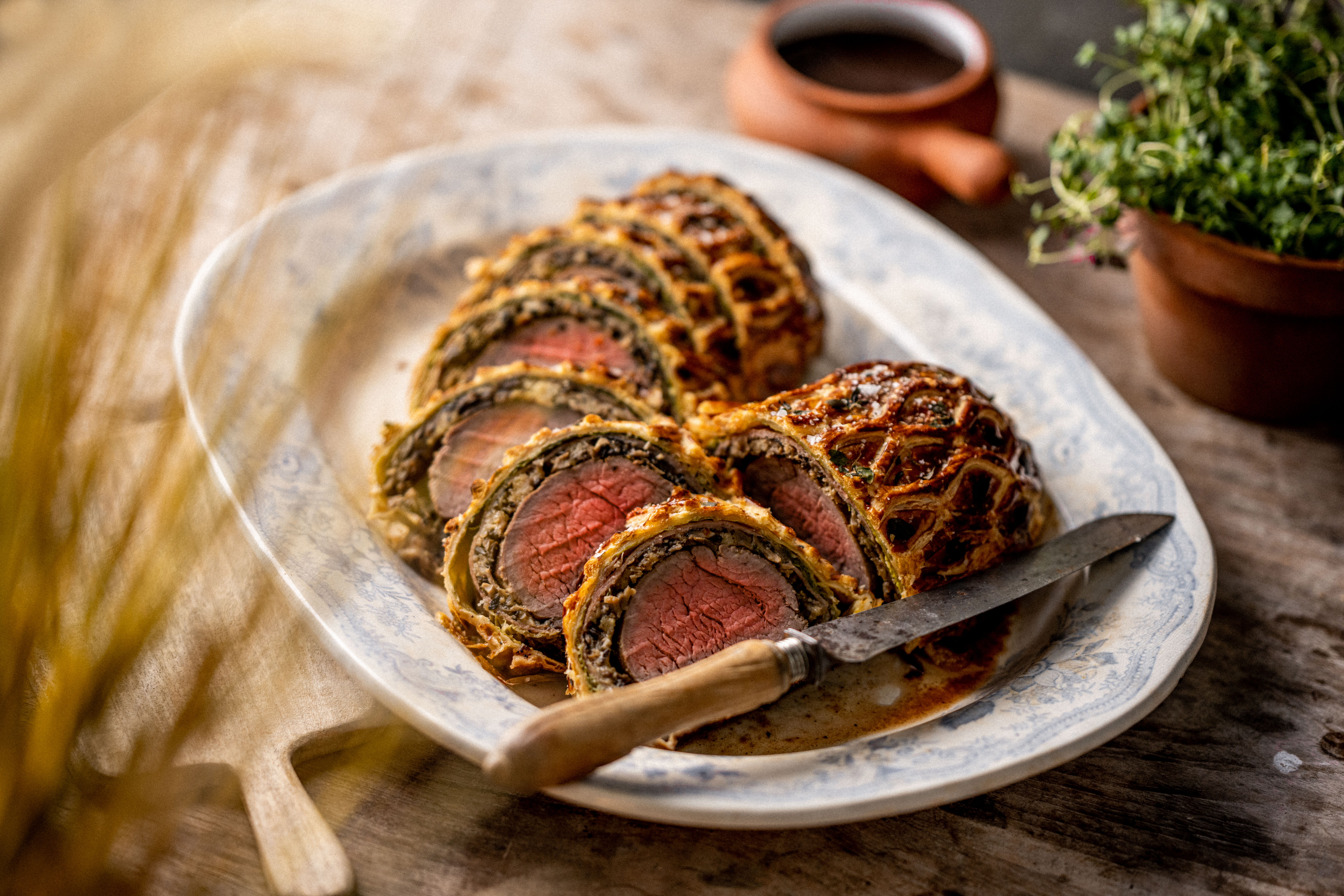
However, the reputation of Beef Wellington as a difficult dish often scares away even capable cooks. The challenge lies in the harmony of its components: keeping the pastry crisp while ensuring the beef remains a perfect medium-rare. To master this dish, one must understand not just the recipe, but the technical principles that prevent the dreaded “soggy bottom” and ensure a magnificent presentation.
The Anatomy of Excellence: The Core Components
A Beef Wellington is only as good as the sum of its parts. Because it is a minimalist dish in terms of the number of elements, each ingredient must be of the highest quality.
The heart of the dish is the Beef Tenderloin (Filet Mignon). This is the most tender cut of the cow, prized for its lean, buttery texture. Because the beef is encased in pastry, it doesn’t have the benefit of direct heat to develop a crust during the final bake. Therefore, a hard sear in a screaming-hot pan prior to assembly is essential to lock in flavor and provide that necessary deep-brown exterior.
Surrounding the beef is the Duxelles. This is a finely chopped mixture of mushrooms (usually cremini or button), shallots, and herbs sautéed in butter. The goal of a duxelles is twofold: to provide a rich, umami flavor and to act as a moisture barrier. The mushrooms must be cooked until they are almost dry; any remaining water in the fungi will steam inside the pastry, ruining the crunch.
To further protect the pastry, a layer of Prosciutto or Crêpes is used. Wrapping the mushroom-covered beef in thin slices of prosciutto provides a salty kick and a physical shield against juices. Some traditionalists also use a thin, savory chive crêpe for the same purpose, adding an extra layer of structural integrity.
Finally, there is the Puff Pastry. This buttery, laminated dough provides the golden “shell.” A high-quality, all-butter puff pastry is non-negotiable for the best flavor and lift.
The Technical Secret: The Chilling Process
If there is one secret to a successful Beef Wellington, it is the art of chilling. Many beginners rush the assembly, leading to a structural collapse. Every stage of the Wellington preparation requires the refrigerator.
After searing the beef, it must be completely cold before it is wrapped in the duxelles. If the beef is warm, it will begin to melt the fat in the prosciutto and start cooking the mushrooms prematurely. Similarly, once the beef is rolled into its tight log (often using plastic wrap to ensure a perfect cylinder), it should be chilled for at least 30 minutes. This “sets” the shape, making it much easier to wrap in the puff pastry later.
Once the pastry is applied and decorated, the entire Wellington should be chilled once more before entering the oven. Cold pastry hitting a hot oven is what creates that dramatic, flaky rise. It also ensures the meat doesn’t overcook before the pastry has time to brown.
Managing the Moisture: Avoiding the Soggy Bottom
The biggest fear in Beef Wellington history is the “soggy bottom”—where the juices from the meat and mushrooms soak into the bottom layer of the pastry, turning it into a gummy mess.
To prevent this, ensure your duxelles is “sec” (dry). Cook the mushrooms until they no longer release liquid and start to brown slightly. Additionally, many chefs recommend a “double wrap” technique. By using the prosciutto to create a tight, waterproof seal around the beef and mushrooms, you keep the moisture contained. Scoring the top of the pastry with a sharp knife not only looks beautiful but also allows steam to escape from the interior, further protecting the crispness of the crust.
Achieving the Perfect Temperature
Precision is the difference between a masterpiece and a disappointment. Because the beef is hidden, you cannot see when it is done. A meat thermometer is your best friend. For a perfect medium-rare, aim for an internal temperature of 125°F to 130°F (52°C to 54°C).
Remember that “carryover cooking” is real. The beef will continue to rise in temperature by about 5 to 10 degrees while it rests. Resting is arguably the most important step. If you cut into a Wellington immediately after removing it from the oven, all the juices will flood out, and the pastry will instantly lose its texture. A 15-minute rest allows the juices to redistribute back into the fibers of the meat.
Conclusion
Beef Wellington is more than just a meal; it is a testament to the cook’s patience, precision, and respect for ingredients. It represents the height of culinary luxury, combining the earthiness of forest mushrooms with the elegance of prime beef and the decadence of French pastry.
While it may seem intimidating, the process is manageable when broken down into its fundamental steps: sear, chill, wrap, and bake. By focusing on moisture control and temperature management, you can create a dish that is as visually stunning as it is delicious. Whether you are cooking for a holiday or simply testing your limits in the kitchen, the Beef Wellington remains the gold standard of the dinner table. Happy cooking!